Battle. Build words. Win.
WORD QUAKE — WORD BATTLE GAME
Word Quake is a competitive word battle game where players face off in fast-paced, head-to-head matches. Players set match conditions, form words under pressure, earn points, and compete for the top spot. It combines strategy, speed, and friendly competition with a playful interface that keeps the energy high and players coming back for more.
Mobile Game Design
Gaming
Lead Product Designer
2 Weeks
Solo Designer
2 Weeks
Solo Designer
Tools
Figma, FigJam, Notion
Figma, FigJam, Notion
Responsibilities
Responsibilities
User Research, Game Flow Design, Interaction Design, Prototyping, UI Design, Usability Testing, Animation Design
User Research, Game Flow Design, Interaction Design, Prototyping, UI Design, Usability Testing, Animation Design
01.
Overview
Word Quake is designed for people who love word games but want more competition and social interaction. The game combines learning with entertainment, making vocabulary-building feel exciting rather than educational. Players can customize match conditions (entry points, rounds, word length), compete head-to-head, track performance, and climb leaderboards. The interface is designed to be intuitive and energetic, with smooth transitions, clear feedback, and playful visuals that maintain high engagement throughout gameplay.
Veya is built for the person who wants to go out but doesn’t want to go alone. It sits at the intersection of event discovery, social matching, and AI-powered community building — designed to reduce the social friction that stops people from showing up in the first place.
03.
Project Goal
Design a competitive real-time word battle game that combines the strategic thinking of Scrabble with the fast-paced intensity of modern mobile esports, creating an accessible yet skill-based experience that keeps players coming back for "one more match."
05.
Key Decisions
1. 60-second match timer over unlimited games to create urgency and maintain energy throughout each session 2. Real-time multiplayer over turn-based to maximize competitive tension and social presence 3. Visible opponent tiles and countdown over hidden information to enable strategic counterplay and reading opponents 4. Power-up system (tile bombs, letter swaps, freezes) over pure word skills to add variety and comeback mechanics 5. Ranked leagues with seasonal resets over simple ELO to create progression milestones and fresh starts
1. Lightweight onboarding over long forms — users set their vibe in under 2 minutes using visual sliders and interest tags. 2. Small group introductions (3–5 people max) before events — keeps pre-event connection low-pressure. 3. AI prompts as conversation starters, not bios — instead of showing a profile, Veya nudges users with specific, shared talking points. 4. Social comfort level as a first-class filter — introverts and extroverts get different event and group recommendations.
07.
Results
Prototype tested with 18 players (mix of casual and competitive gamers) across three rounds. 16/18 said the real-time format made matches feel more exciting than turn-based word games. Average match completion rate was 94%, with 78% of testers playing 5+ consecutive matches in a single session ("just one more game" effect). Players praised the power-up system for creating comeback moments and strategic depth. The visible opponent rack was controversial but ultimately preferred (12/18) for enabling counter-strategy. 89% said they would download the game if it launched.
Prototype tested with 12 users across two rounds. 10/12 said the pre-event group feature made them significantly more likely to attend events they’d normally skip. Average onboarding completion rate in testing: 94%. Users described the experience as “actually thoughtful” and “like having a socially smart friend.”
02.
Problem Statement
Most mobile word games are passive single-player experiences that lack real-time competition and social engagement. Players want the strategic depth of traditional word games combined with the adrenaline of live PvP matches, but existing solutions either feel too slow (turn-based) or too simple (basic letter matching).
04.
Approach
Most mobile word games are passive single-player experiences that lack real-time competition and social engagement. Players want the strategic depth of traditional word games combined with the adrenaline of live PvP matches, but existing solutions either feel too slow (turn-based) or too simple (basic letter matching).
06.
Solution
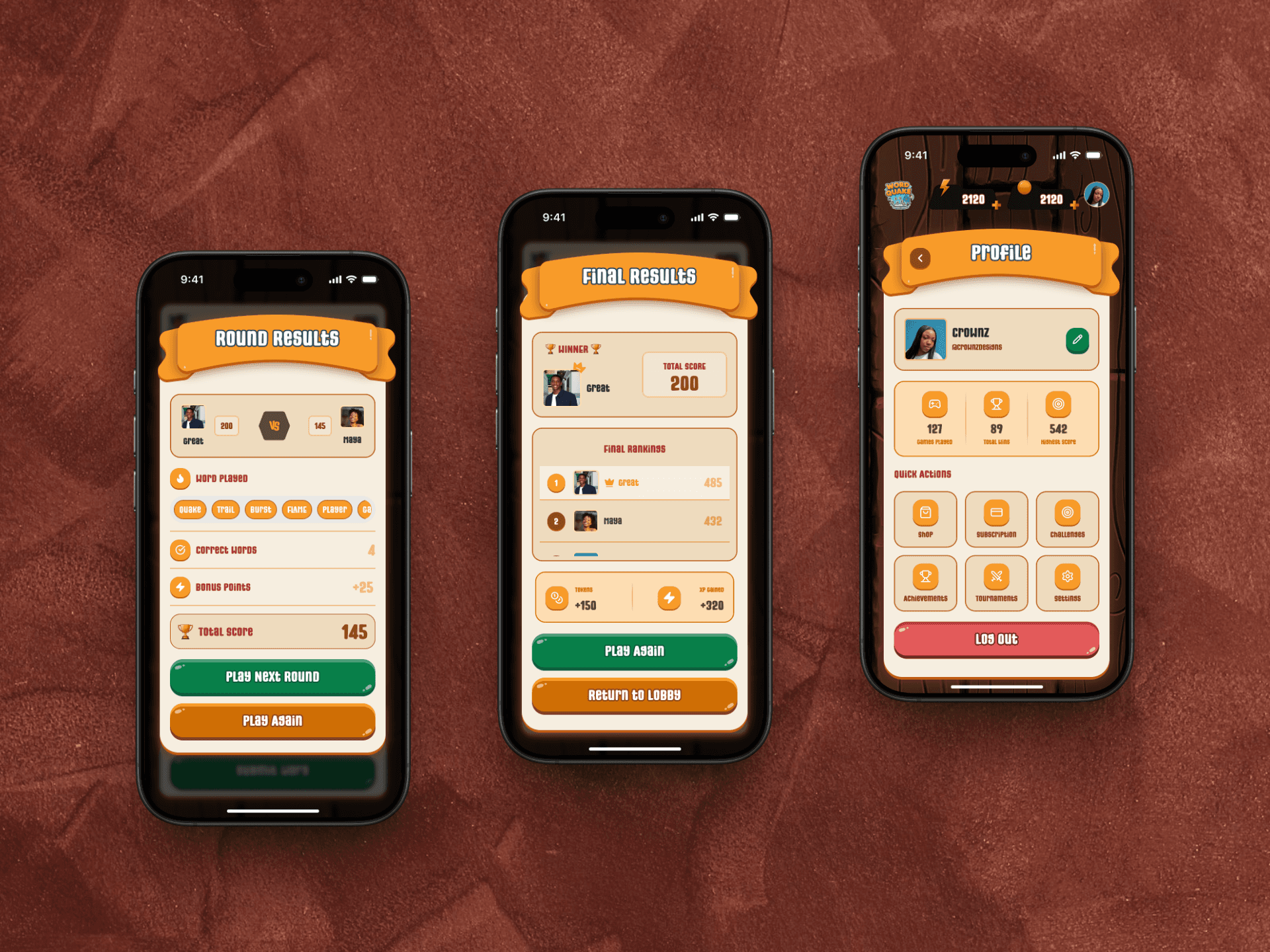
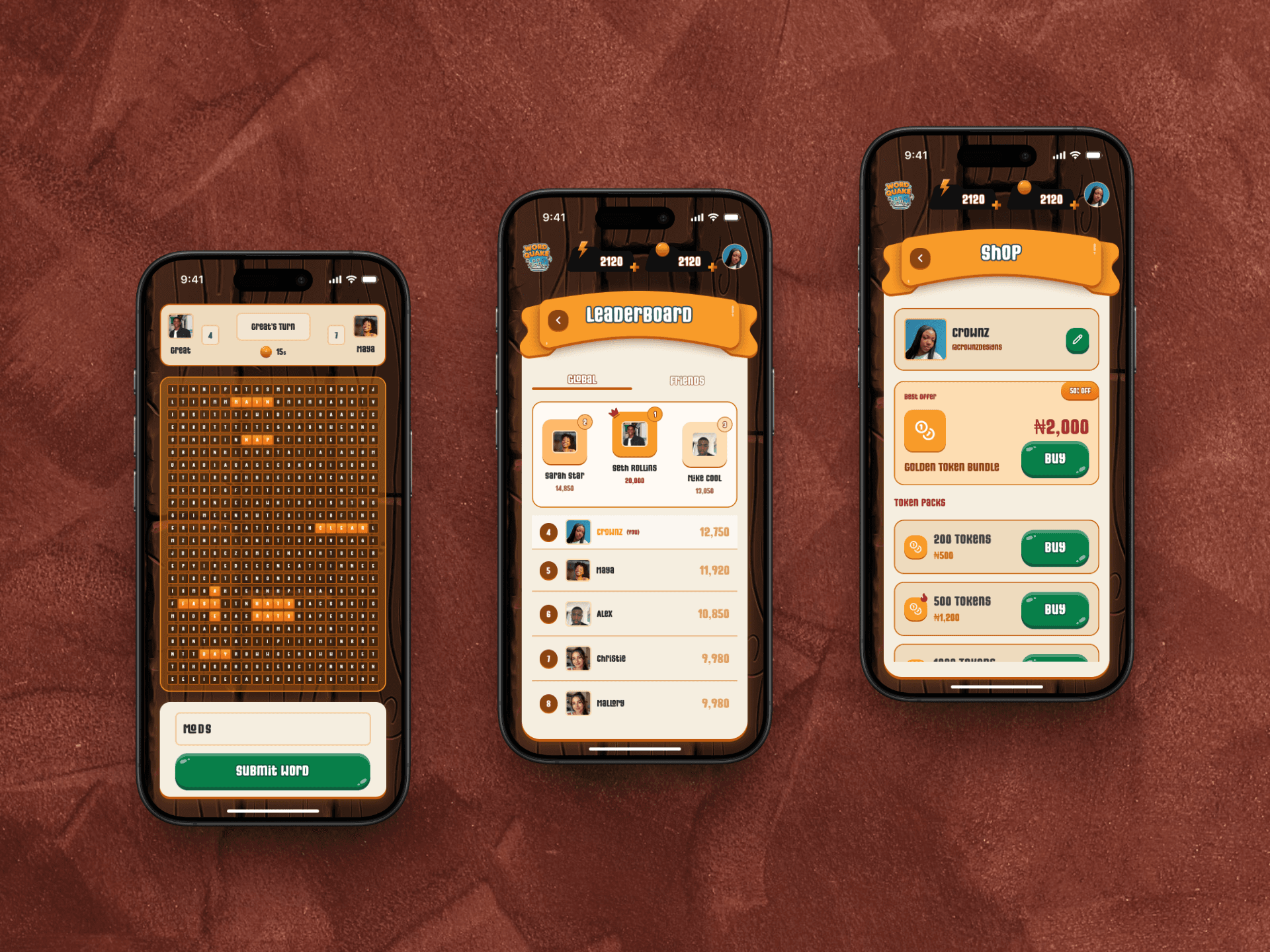
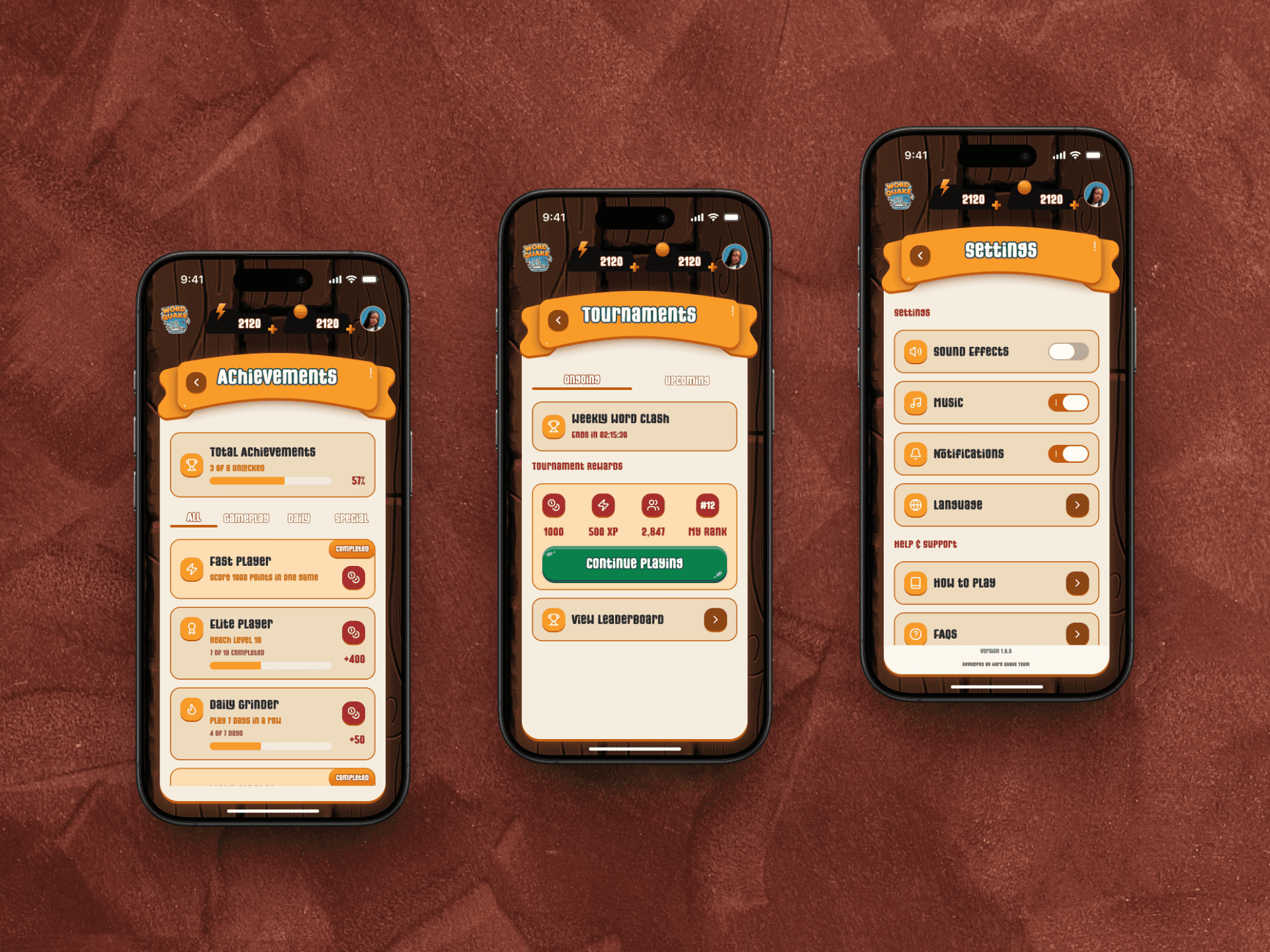
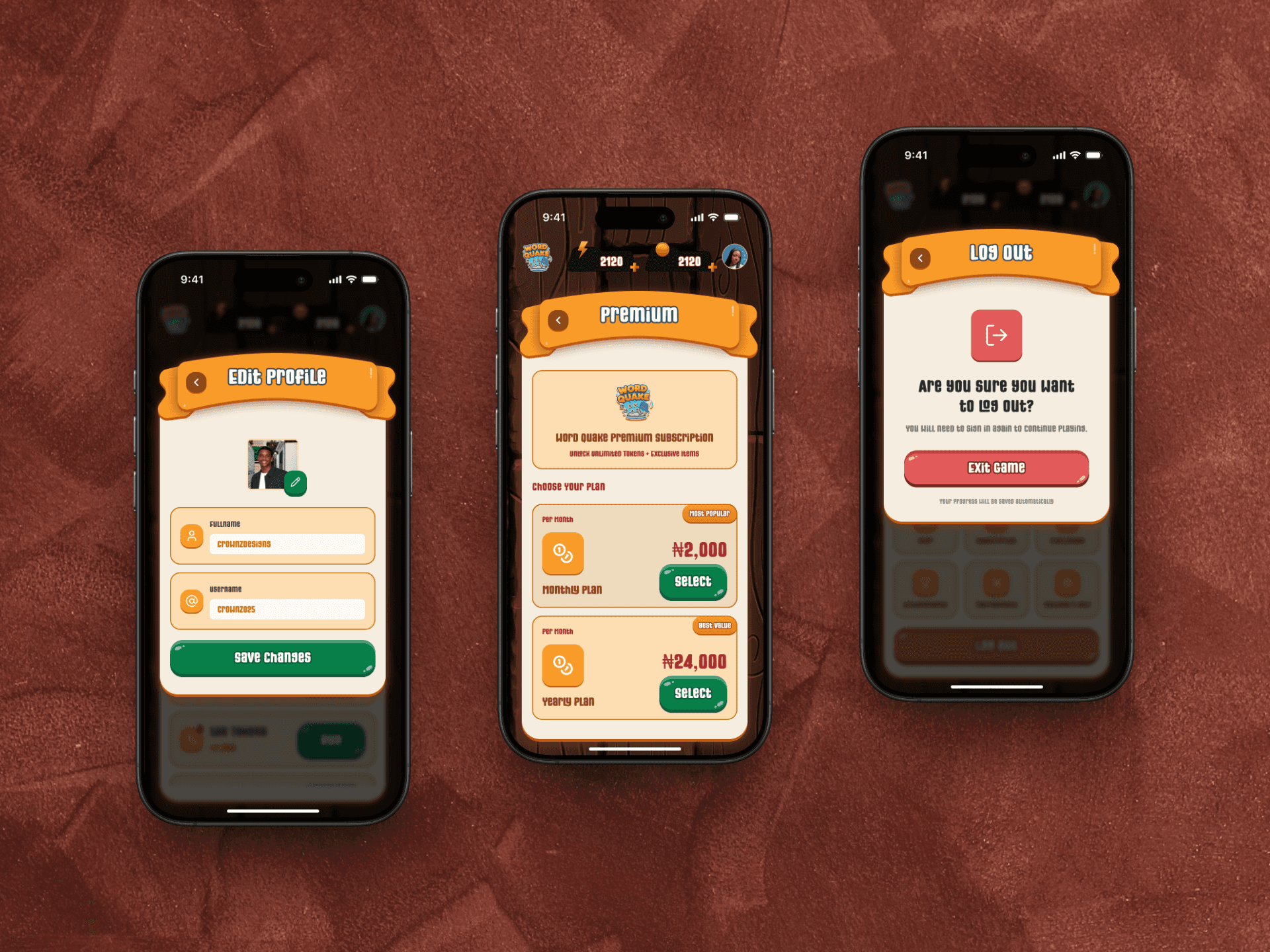
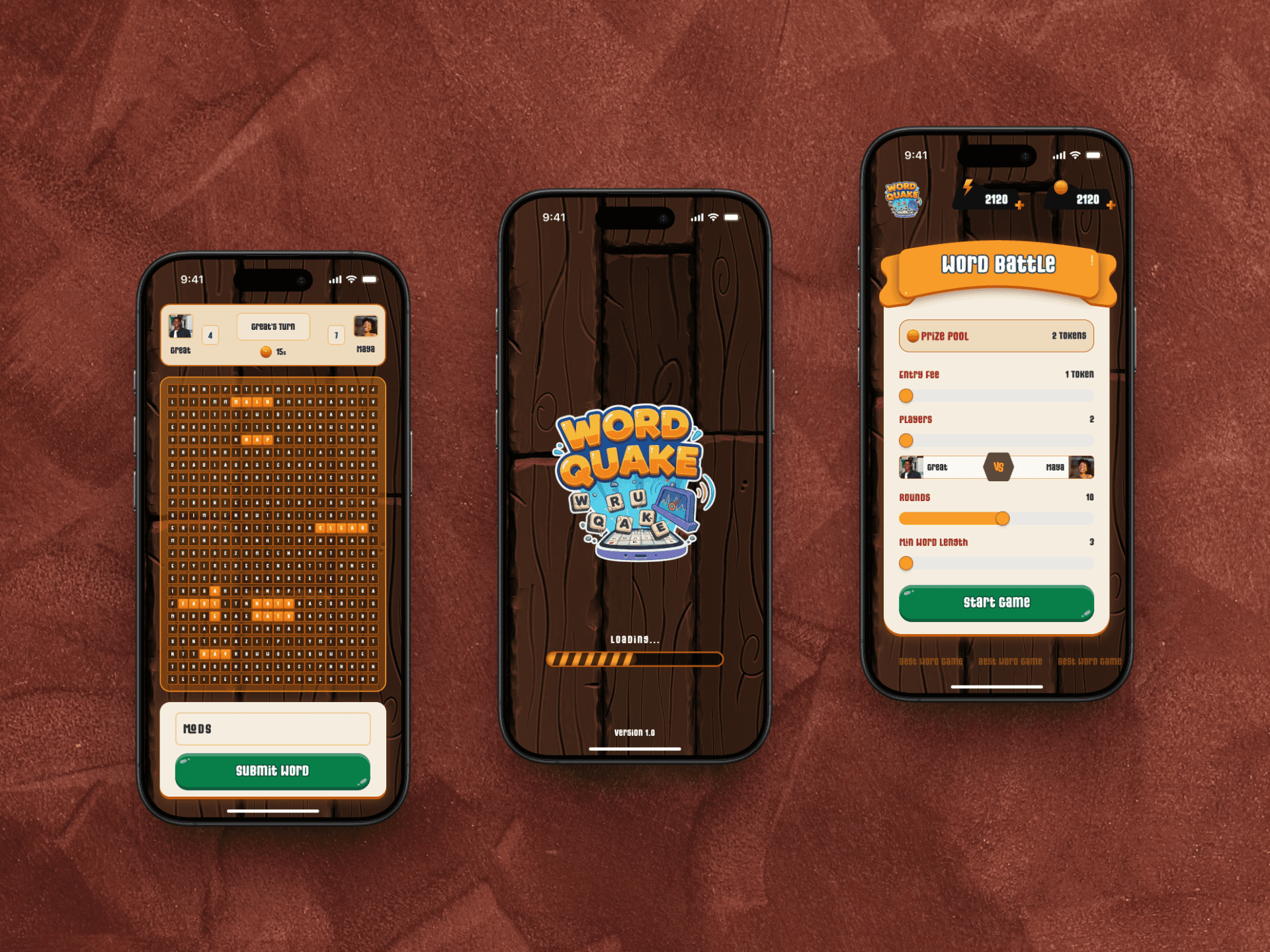
A mobile-first competitive word game with four core screens: (1) Battle Arena where players see their own 7-letter tile rack, opponent's visible rack, shared 5x5 grid, 60-second countdown, and power-up slots, (2) Match Lobby with quick-play matchmaking, friend challenges, and practice mode against AI, (3) Progression Dashboard showing current rank, seasonal progress, win/loss stats, and unlocked power-ups, and (4) Post-Match Summary with detailed word breakdown, points earned, rank change, and rematch option. The game loop is tight: tap tiles to spell words on the grid, longer words = more points + power-ups, first to deplete opponent's health bar or highest score at 60 seconds wins.
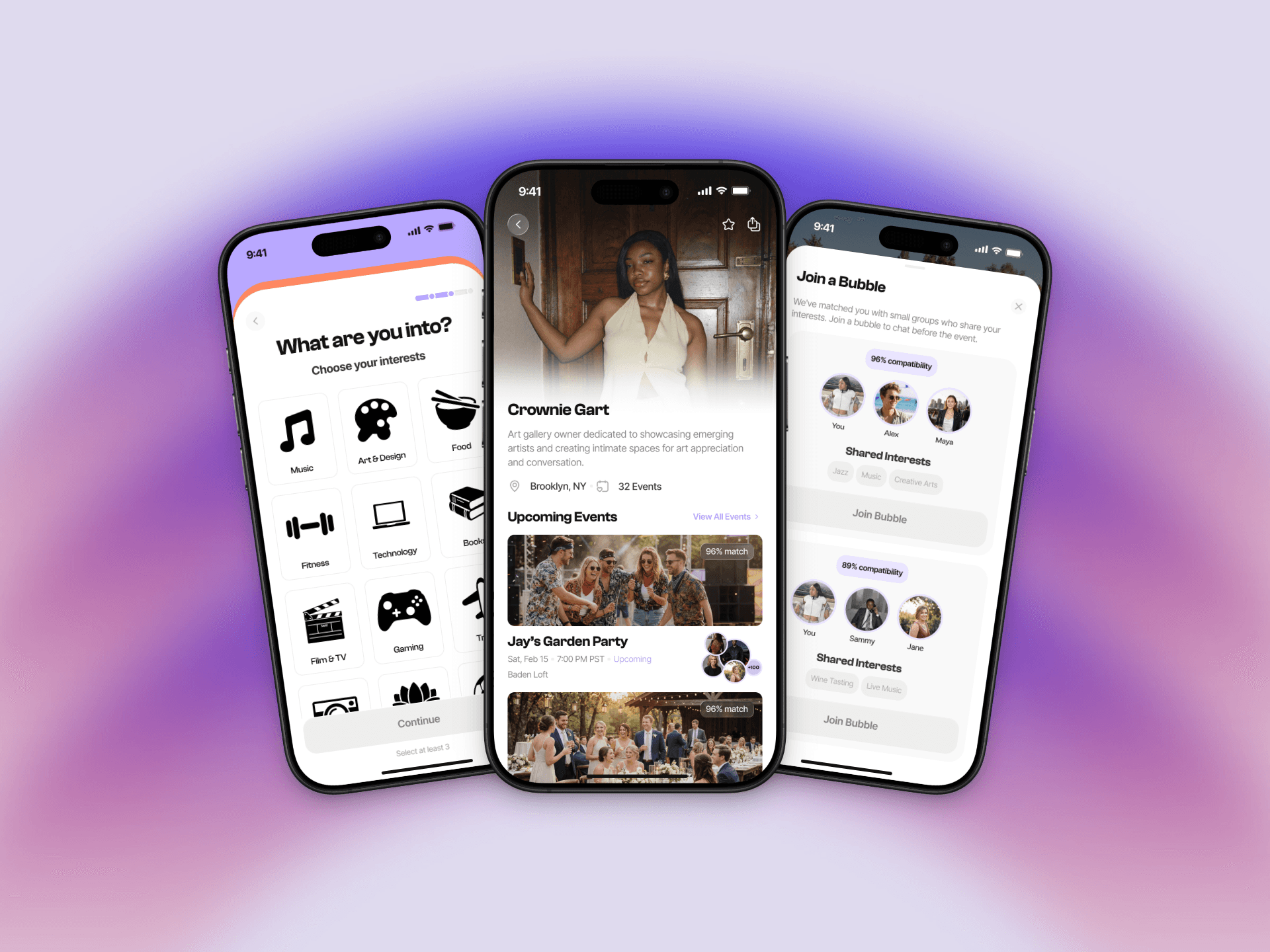
A mobile-first app with four core experiences: (1) Vibe Profile setup that teaches the AI your personality and social energy, (2) AI-curated event discovery with crowd previews and vibe match scores, (3) Pre-event group intros where Veya connects you with a compatible group before you walk in, and (4) In-app conversation nudges that make breaking the ice feel effortless.
08.
What I Learned
The biggest lesson from Word Quake: time pressure transforms everything. The same core mechanic (spelling words on a grid) feels completely different at 60 seconds versus unlimited time. Urgency creates emotion. Players who normally overthink every word in traditional games became instinctive and expressive under the countdown. I also learned that not all transparency is good—showing opponent tiles was polarizing, but the players who loved it REALLY loved it because it added a psychological metagame. Design for strong reactions, not universal approval. Finally, the "one more match" retention wasn't about rewards or progression—it was about the 60-second commitment feeling low-risk. Short sessions lower friction for repeat play.
The biggest design lesson from Veya: people don’t need more options, they need more confidence. Every screen that removed a decision or reduced uncertainty tested better than screens that gave users more control. Trust the AI, reduce the noise, and design for the emotional journey — not just the task flow.
01.
Overview
Word Quake is designed for people who love word games but want more competition and social interaction. The game combines learning with entertainment, making vocabulary-building feel exciting rather than educational. Players can customize match conditions (entry points, rounds, word length), compete head-to-head, track performance, and climb leaderboards. The interface is designed to be intuitive and energetic, with smooth transitions, clear feedback, and playful visuals that maintain high engagement throughout gameplay.
02.
Problem Statement
Most mobile word games are passive single-player experiences that lack real-time competition and social engagement. Players want the strategic depth of traditional word games combined with the adrenaline of live PvP matches, but existing solutions either feel too slow (turn-based) or too simple (basic letter matching).
03.
Project Goal
Design a competitive real-time word battle game that combines the strategic thinking of Scrabble with the fast-paced intensity of modern mobile esports, creating an accessible yet skill-based experience that keeps players coming back for "one more match."
04.
Approach
Most mobile word games are passive single-player experiences that lack real-time competition and social engagement. Players want the strategic depth of traditional word games combined with the adrenaline of live PvP matches, but existing solutions either feel too slow (turn-based) or too simple (basic letter matching).
05.
Key Decisions
1. 60-second match timer over unlimited games to create urgency and maintain energy throughout each session 2. Real-time multiplayer over turn-based to maximize competitive tension and social presence 3. Visible opponent tiles and countdown over hidden information to enable strategic counterplay and reading opponents 4. Power-up system (tile bombs, letter swaps, freezes) over pure word skills to add variety and comeback mechanics 5. Ranked leagues with seasonal resets over simple ELO to create progression milestones and fresh starts
06.
Solution
A mobile-first competitive word game with four core screens: (1) Battle Arena where players see their own 7-letter tile rack, opponent's visible rack, shared 5x5 grid, 60-second countdown, and power-up slots, (2) Match Lobby with quick-play matchmaking, friend challenges, and practice mode against AI, (3) Progression Dashboard showing current rank, seasonal progress, win/loss stats, and unlocked power-ups, and (4) Post-Match Summary with detailed word breakdown, points earned, rank change, and rematch option. The game loop is tight: tap tiles to spell words on the grid, longer words = more points + power-ups, first to deplete opponent's health bar or highest score at 60 seconds wins.
07.
Results
Prototype tested with 18 players (mix of casual and competitive gamers) across three rounds. 16/18 said the real-time format made matches feel more exciting than turn-based word games. Average match completion rate was 94%, with 78% of testers playing 5+ consecutive matches in a single session ("just one more game" effect). Players praised the power-up system for creating comeback moments and strategic depth. The visible opponent rack was controversial but ultimately preferred (12/18) for enabling counter-strategy. 89% said they would download the game if it launched.
08.
What I Learned
The biggest lesson from Word Quake: time pressure transforms everything. The same core mechanic (spelling words on a grid) feels completely different at 60 seconds versus unlimited time. Urgency creates emotion. Players who normally overthink every word in traditional games became instinctive and expressive under the countdown. I also learned that not all transparency is good—showing opponent tiles was polarizing, but the players who loved it REALLY loved it because it added a psychological metagame. Design for strong reactions, not universal approval. Finally, the "one more match" retention wasn't about rewards or progression—it was about the 60-second commitment feeling low-risk. Short sessions lower friction for repeat play.
Design SHOWCASE

LET'S WORK TOGETHER
BACK TO TOP
LET'S WORK TOGETHER
BACK TO TOP