Find your people. Feel at home anywhere.
VEYA — AI-POWERED SOCIAL APP
Veya is a social discovery app that matches you to events and people based on your vibe not just your interests. I designed the full product experience from onboarding to post-event connection.
Mobile App Design
Social Tech / Event Discovery
Lead Product Designer
3 Weeks
Solo Designer
3 Weeks
Solo Designer
Tools
Figma, FigJam, Framer, ChatGPT
Figma, FigJam, Framer, ChatGPT
Responsibilities
Responsibilities
User Research, Persona Development, Information Architecture, Wireframing, Prototyping, UI Design, Interaction Design, Usability Testing
User Research, Persona Development, Information Architecture, Wireframing, Prototyping, UI Design, Interaction Design, Usability Testing
01.
Overview
Veya is built for the person who wants to go out but doesn’t want to go alone. It sits at the intersection of event discovery, social matching, and AI-powered community building — designed to reduce the social friction that stops people from showing up in the first place.
03.
Project Goal
Design an experience that makes social discovery feel natural — helping users move from “I want to go out” to actually showing up, meeting people they click with, and wanting to do it again.
05.
Key Decisions
1. Lightweight onboarding over long forms users set their vibe in under 2 minutes using visual sliders and interest tags. 2. Small group introductions (3–5 people max) before events — keeps pre-event connection low-pressure. 3. AI prompts as conversation starters, not bios — instead of showing a profile, Veya nudges users with specific, shared talking points. 4. Social comfort level as a first-class filter — introverts and extroverts get different event and group recommendations.
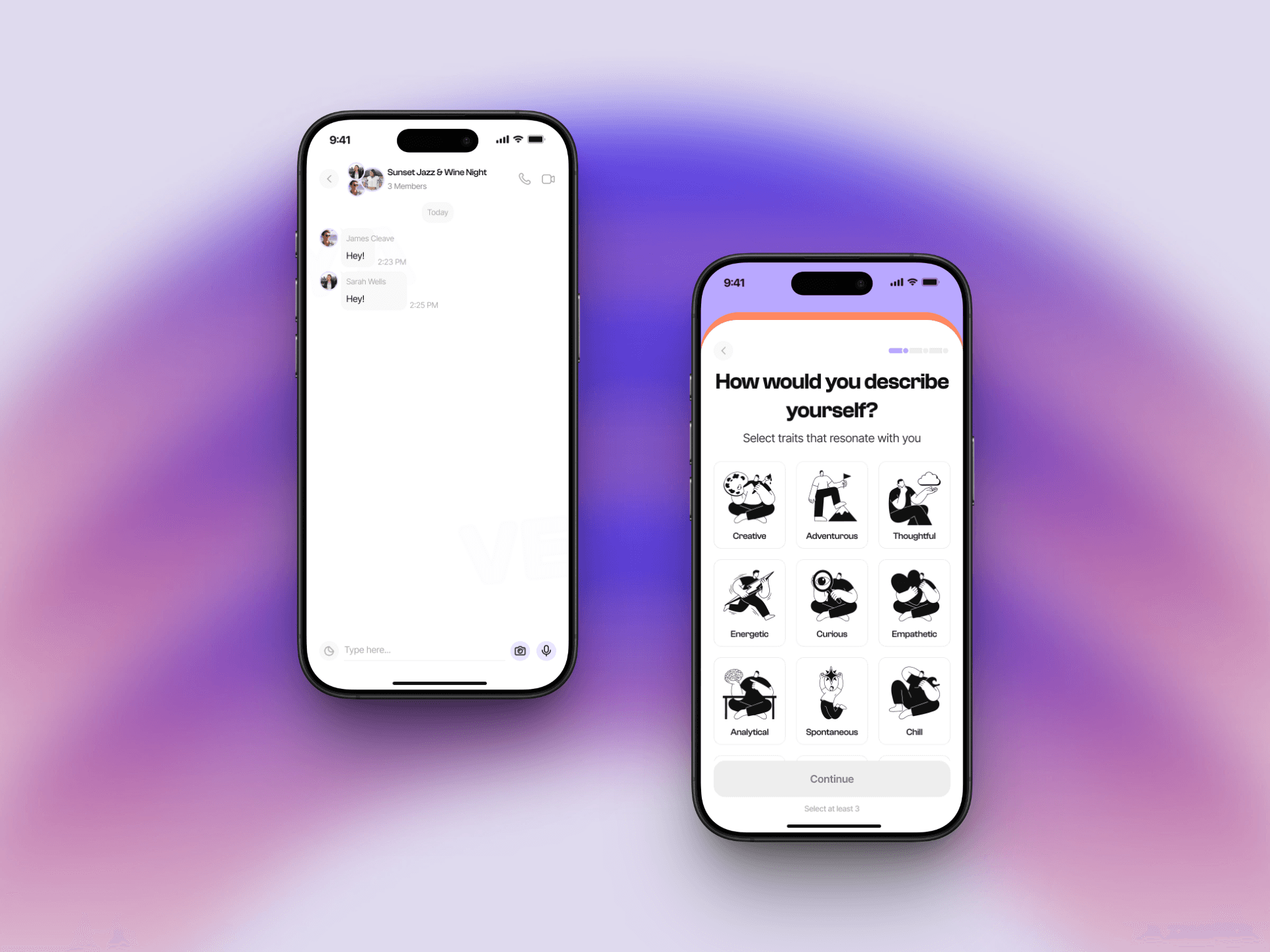
1. Lightweight onboarding over long forms — users set their vibe in under 2 minutes using visual sliders and interest tags. 2. Small group introductions (3–5 people max) before events — keeps pre-event connection low-pressure. 3. AI prompts as conversation starters, not bios — instead of showing a profile, Veya nudges users with specific, shared talking points. 4. Social comfort level as a first-class filter — introverts and extroverts get different event and group recommendations.
07.
Results
Prototype tested with 12 users across two rounds. 10/12 said the pre-event group feature made them significantly more likely to attend events they’d normally skip. Average onboarding completion rate in testing: 94%. Users described the experience as “actually thoughtful” and “like having a socially smart friend.”
02.
Problem Statement
Going to events alone feels uncomfortable for most people. Existing apps help you find what to do, but none of them help you feel prepared for who you’ll meet. The result: people scroll past events they’d actually enjoy because they have no one to go with and no idea what to expect.
04.
Approach
Going to events alone feels uncomfortable for most people. Existing apps help you find what to do, but none of them help you feel prepared for who you’ll meet. The result: people scroll past events they’d actually enjoy because they have no one to go with and no idea what to expect.
06.
Solution
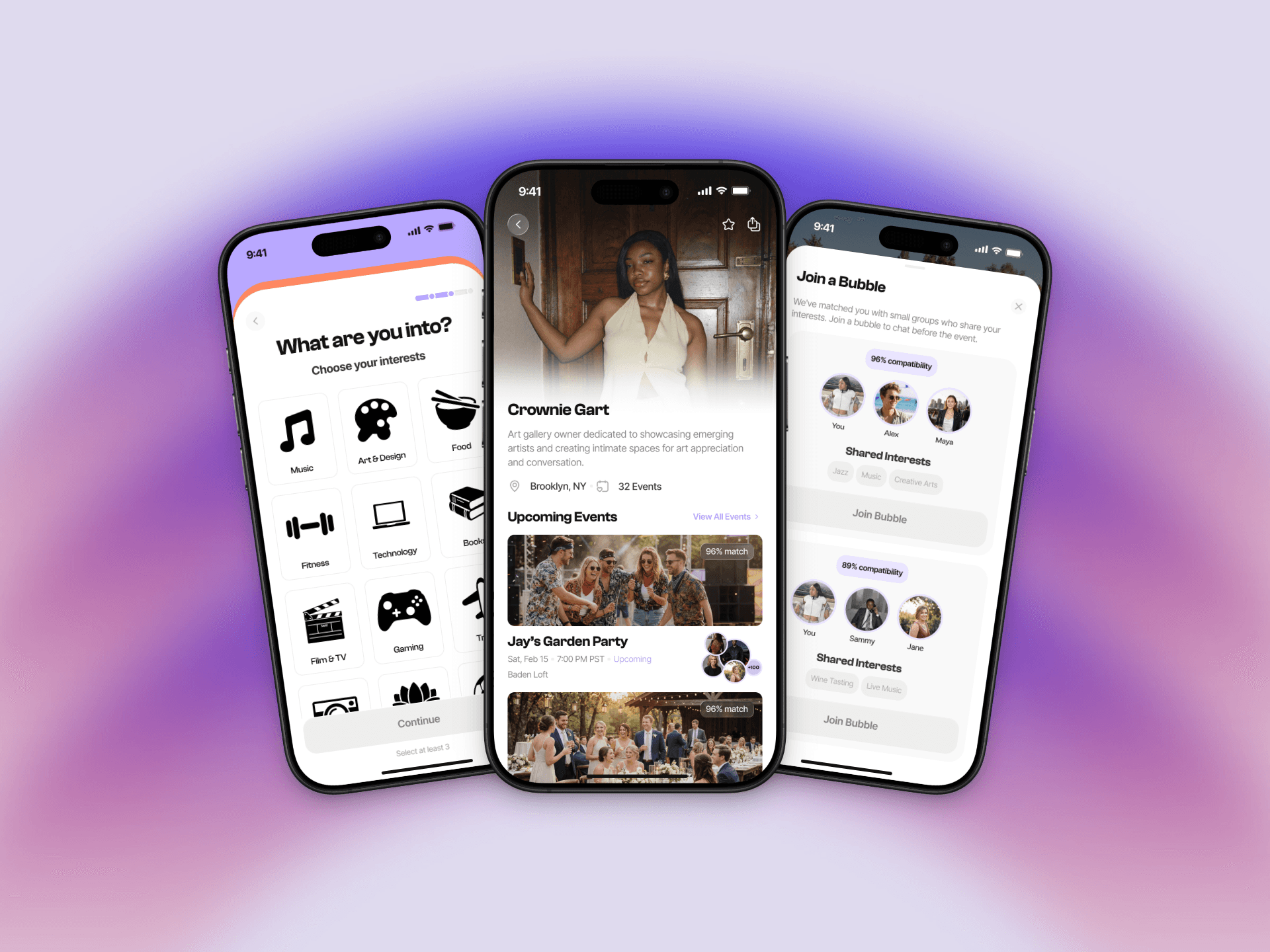
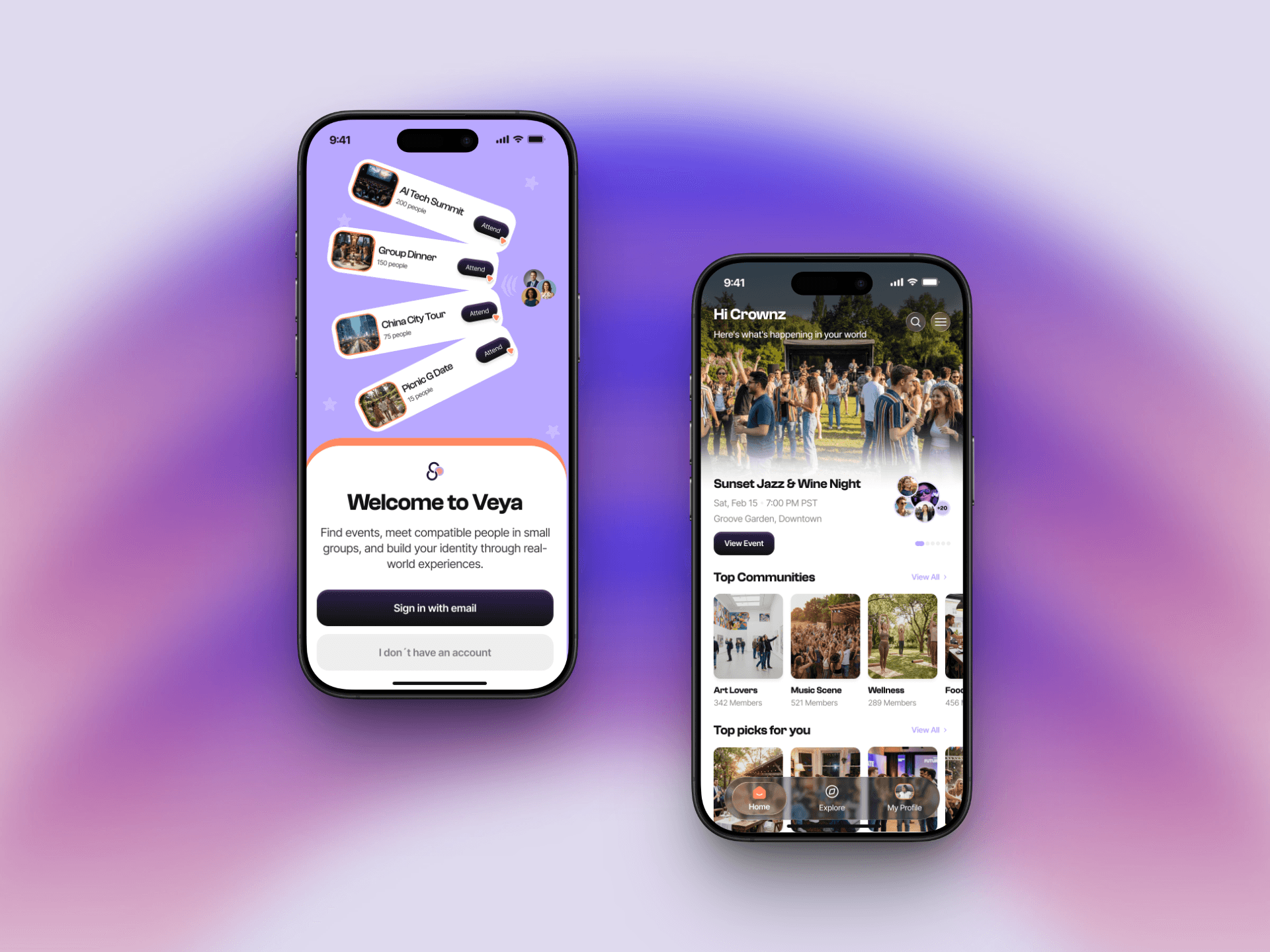
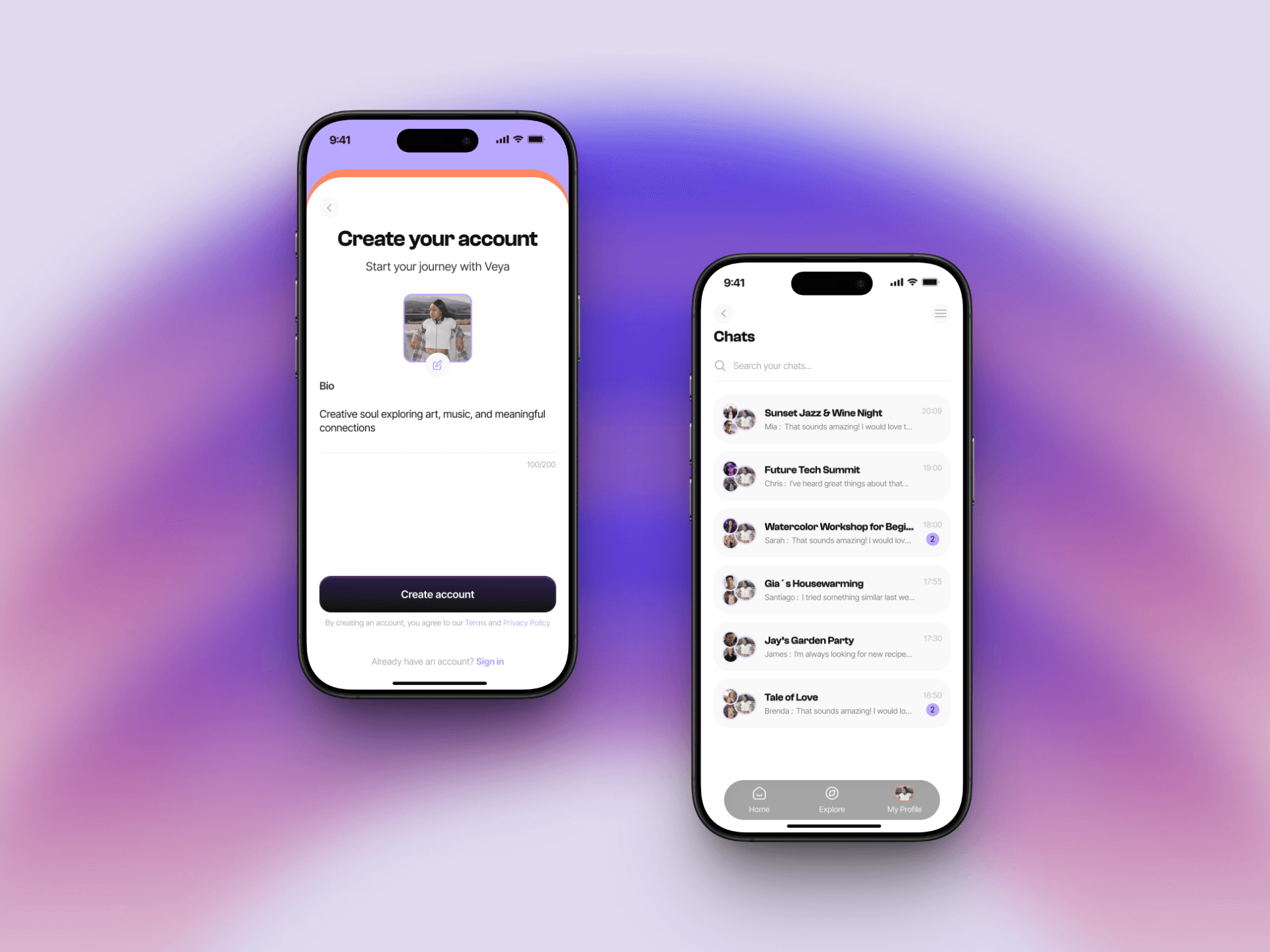
A mobile-first app with four core experiences: (1) Vibe Profile setup that teaches the AI your personality and social energy, (2) AI-curated event discovery with crowd previews and vibe match scores, (3) Pre-event group intros where Veya connects you with a compatible group before you walk in, and (4) In-app conversation nudges that make breaking the ice feel effortless.
08.
What I Learned
The biggest design lesson from Veya: people don’t need more options, they need more confidence. Every screen that removed a decision or reduced uncertainty tested better than screens that gave users more control. Trust the AI, reduce the noise, and design for the emotional journey — not just the task flow.
01.
Overview
Veya is built for the person who wants to go out but doesn’t want to go alone. It sits at the intersection of event discovery, social matching, and AI-powered community building — designed to reduce the social friction that stops people from showing up in the first place.
02.
Problem Statement
Going to events alone feels uncomfortable for most people. Existing apps help you find what to do, but none of them help you feel prepared for who you’ll meet. The result: people scroll past events they’d actually enjoy because they have no one to go with and no idea what to expect.
03.
Project Goal
Design an experience that makes social discovery feel natural — helping users move from “I want to go out” to actually showing up, meeting people they click with, and wanting to do it again.
04.
Approach
Going to events alone feels uncomfortable for most people. Existing apps help you find what to do, but none of them help you feel prepared for who you’ll meet. The result: people scroll past events they’d actually enjoy because they have no one to go with and no idea what to expect.
05.
Key Decisions
1. Lightweight onboarding over long forms users set their vibe in under 2 minutes using visual sliders and interest tags. 2. Small group introductions (3–5 people max) before events — keeps pre-event connection low-pressure. 3. AI prompts as conversation starters, not bios — instead of showing a profile, Veya nudges users with specific, shared talking points. 4. Social comfort level as a first-class filter — introverts and extroverts get different event and group recommendations.
06.
Solution
A mobile-first app with four core experiences: (1) Vibe Profile setup that teaches the AI your personality and social energy, (2) AI-curated event discovery with crowd previews and vibe match scores, (3) Pre-event group intros where Veya connects you with a compatible group before you walk in, and (4) In-app conversation nudges that make breaking the ice feel effortless.
07.
Results
Prototype tested with 12 users across two rounds. 10/12 said the pre-event group feature made them significantly more likely to attend events they’d normally skip. Average onboarding completion rate in testing: 94%. Users described the experience as “actually thoughtful” and “like having a socially smart friend.”
08.
What I Learned
The biggest design lesson from Veya: people don’t need more options, they need more confidence. Every screen that removed a decision or reduced uncertainty tested better than screens that gave users more control. Trust the AI, reduce the noise, and design for the emotional journey — not just the task flow.
Design SHOWCASE

LET'S WORK TOGETHER
BACK TO TOP
LET'S WORK TOGETHER
BACK TO TOP