Turn goals into games. Make progress social.
GOJO — GAMIFIED SOCIAL PLATFORM
Gojo is a gamified social platform where everyday challenges, habits, and predictions become competitive multiplayer experiences. Join communities, earn XP, build streaks, climb leaderboards, and unlock ranks in an anime-inspired ecosystem that makes staying consistent actually fun.
Mobile App Design
Social / Gamification
Lead Product Designer
1 Week
Solo Designer
1 Week
Solo Designer
Tools
Figma, FigJam, Notion, Lottie, Framer
Figma, FigJam, Notion, Lottie, Framer
Responsibilities
Responsibilities
User Research, Gamification Design, UX Strategy, Wireframing, Prototyping, UI Design, Motion Design, Usability Testing
User Research, Gamification Design, UX Strategy, Wireframing, Prototyping, UI Design, Motion Design, Usability Testing
01.
Overview
Gojo is designed for people who want to stay consistent with their goals but struggle with motivation when doing things alone. It's built for users who thrive on competition, community, and visible progress, transforming solo habits into social multiplayer experiences that feel rewarding and engaging.
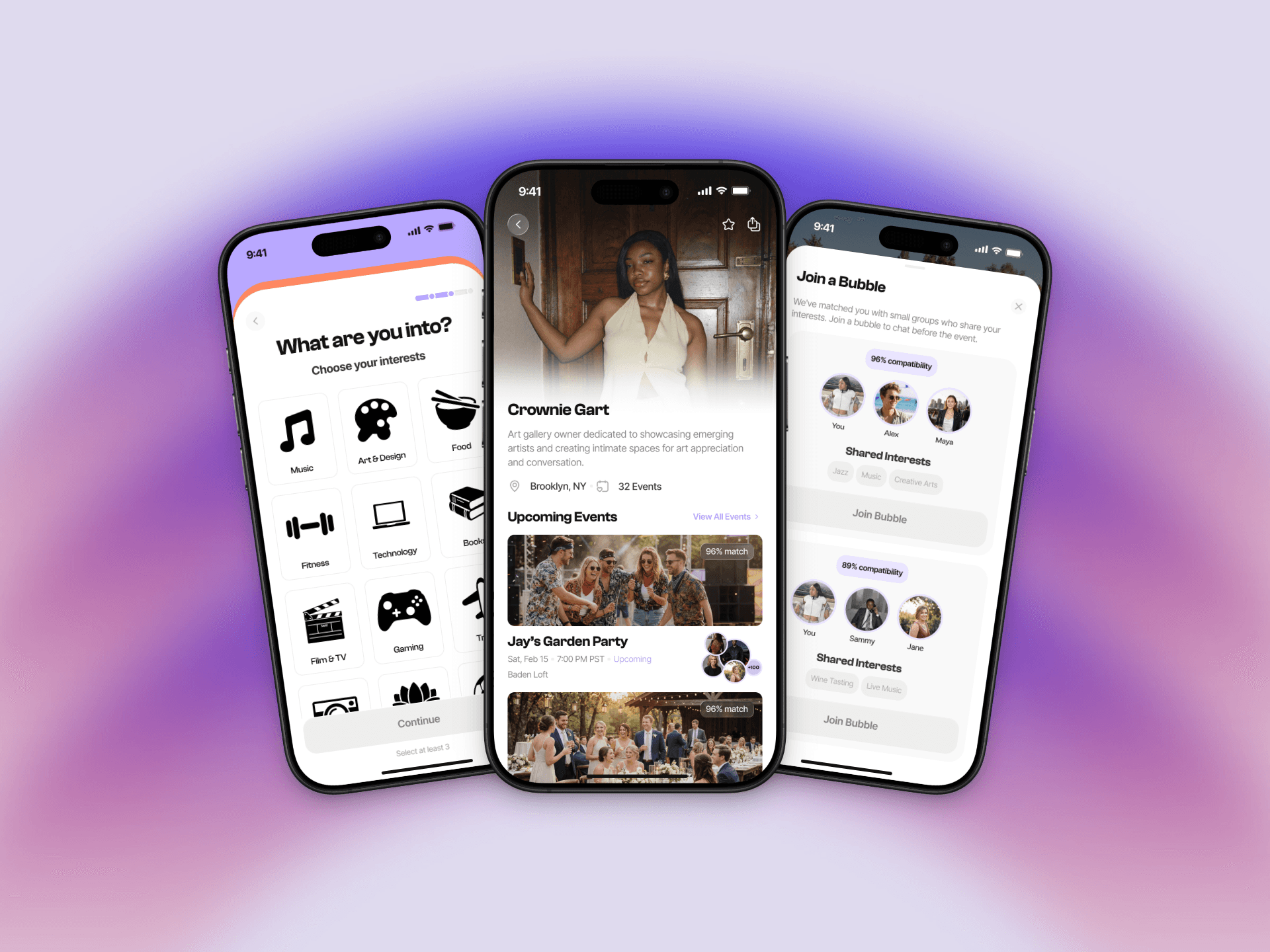
Veya is built for the person who wants to go out but doesn’t want to go alone. It sits at the intersection of event discovery, social matching, and AI-powered community building — designed to reduce the social friction that stops people from showing up in the first place.
03.
Project Goal
Design a gamified social platform that turns everyday habits and challenges into multiplayer experiences, using competition, community, and visible progression systems (XP, streaks, ranks, leaderboards) to keep users motivated and engaged over time. The goal: make consistency feel less like work and more like play.
05.
Key Decisions
1. Challenge-first UX over profile-first to immediately drop users into action rather than setup screens 2. Public leaderboards over private tracking to create social pressure and competitive energy 3. Streak mechanics over daily goals to build compounding momentum and loss aversion 4. XP + rank system over achievement badges to give users a unified sense of progression across all challenges 5. Anime-inspired visual language over minimalist design to create an immersive, playful identity that stands out from sterile productivity apps
1. Lightweight onboarding over long forms — users set their vibe in under 2 minutes using visual sliders and interest tags. 2. Small group introductions (3–5 people max) before events — keeps pre-event connection low-pressure. 3. AI prompts as conversation starters, not bios — instead of showing a profile, Veya nudges users with specific, shared talking points. 4. Social comfort level as a first-class filter — introverts and extroverts get different event and group recommendations.
07.
Results
Prototype tested with 20 users (ages 18-35, mix of casual and competitive personalities) across three rounds. 17/20 said the gamification made habit tracking feel more engaging than their current apps. Average session time was 8 minutes vs. industry average of 2 minutes for habit trackers. The leaderboard feature drove 82% of testers to check in daily during the 7-day test period, compared to their typical 40% consistency rate. Streak mechanics created strong loss aversion—15/20 users said they checked in "just to keep the streak alive." Most requested feature: team challenges where friend groups compete together. 85% said they would download Gojo at launch.
Prototype tested with 12 users across two rounds. 10/12 said the pre-event group feature made them significantly more likely to attend events they’d normally skip. Average onboarding completion rate in testing: 94%. Users described the experience as “actually thoughtful” and “like having a socially smart friend.”
02.
Problem Statement
Most habit tracking and goal-setting apps are solitary, transactional experiences. You set a goal, check it off, maybe see some charts, but there's no social energy, no stakes, and no real excitement. Users abandon habits because they feel isolated and unmotivated there's no one watching, no competition driving them forward, and no community celebrating with them.
04.
Approach
Most habit tracking and goal-setting apps are solitary, transactional experiences. You set a goal, check it off, maybe see some charts, but there's no social energy, no stakes, and no real excitement. Users abandon habits because they feel isolated and unmotivated there's no one watching, no competition driving them forward, and no community celebrating with them.
06.
Solution
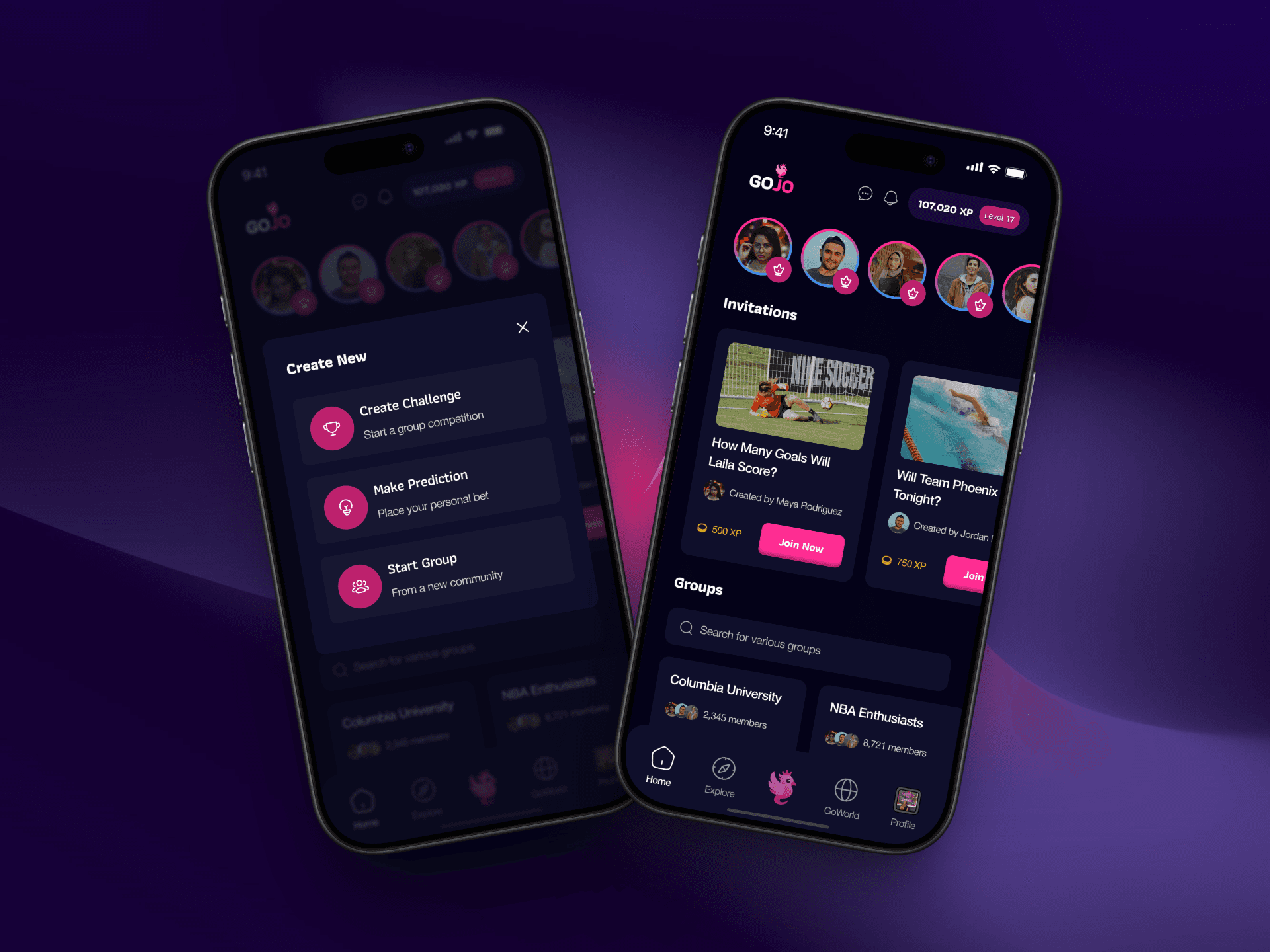
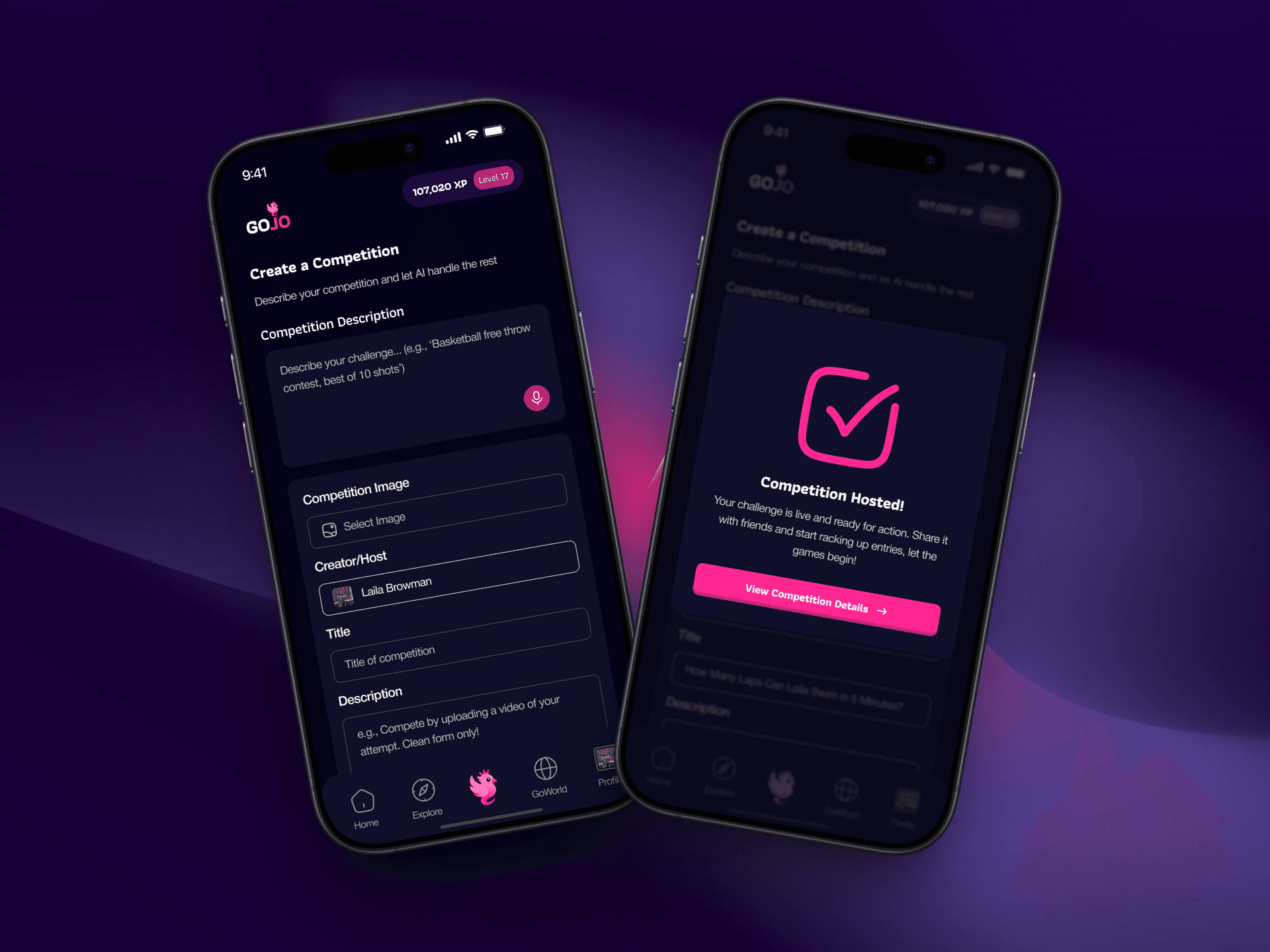
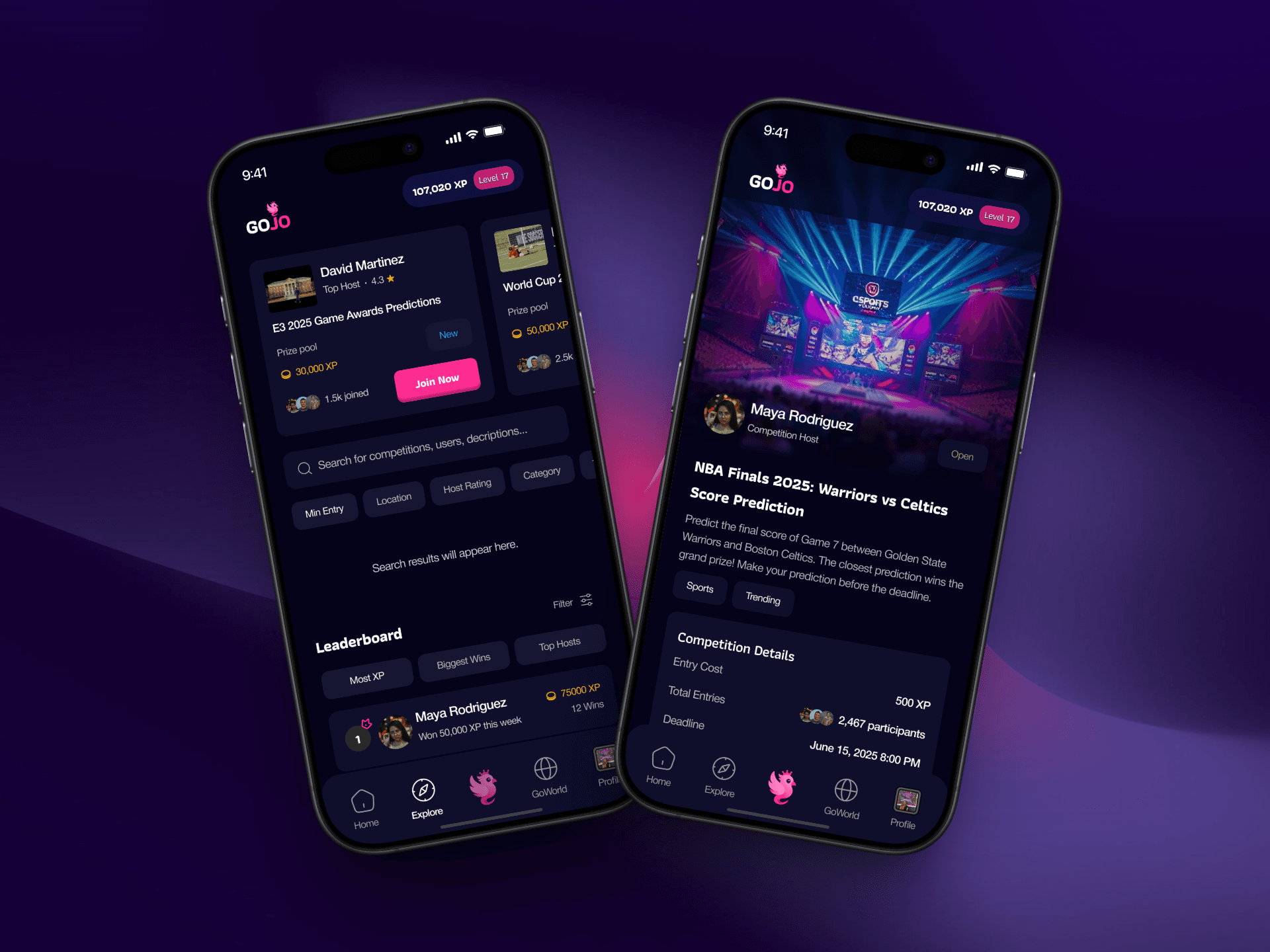
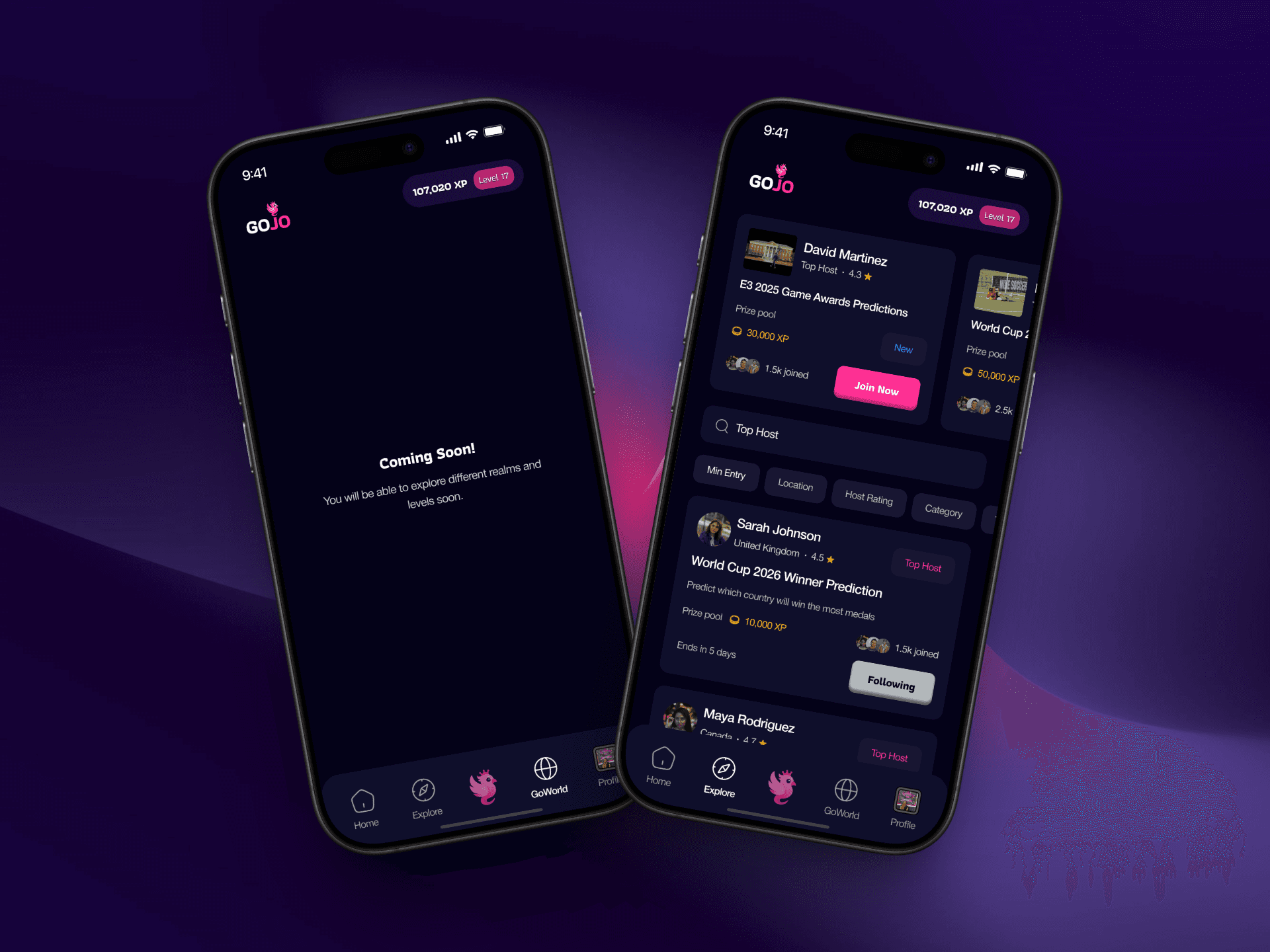
A mobile-first gamified social platform with five core screens: (1) Challenge Feed where users browse trending challenges by category (fitness, productivity, predictions, fun), see participant counts and XP rewards, (2) Active Challenge View showing live leaderboards, personal streak counter, progress tracker, and quick check-in button, (3) Profile Dashboard displaying total XP, current rank badge, active streaks, challenge history, and friend activity feed, (4) Community Hub where users can join interest-based groups, invite friends, react to others' progress, and create custom challenges, and (5) Rewards Screen showing unlockable rank badges, streak milestones, and seasonal achievements. The core interaction: join challenge → check in daily → watch XP accumulate → climb leaderboard → maintain streak → level up rank.
A mobile-first app with four core experiences: (1) Vibe Profile setup that teaches the AI your personality and social energy, (2) AI-curated event discovery with crowd previews and vibe match scores, (3) Pre-event group intros where Veya connects you with a compatible group before you walk in, and (4) In-app conversation nudges that make breaking the ice feel effortless.
08.
What I Learned
The biggest lesson from Gojo: social dynamics beat willpower every time. Users didn't stay consistent because they wanted to build better habits—they stayed because they didn't want to fall behind on the leaderboard or lose their streak in front of friends. Gamification isn't about making apps "fun," it's about creating systems where ego, competition, and social proof do the motivational heavy lifting. I also learned that visual feedback loops (XP bars filling, rank badges unlocking) create dopamine hits that feel more rewarding than checking off a task. Finally, the anime-inspired aesthetic wasn't just stylistic—it signaled to users that this wasn't another "self-improvement" app lecturing them to be better. It gave permission to play, and that playfulness lowered the friction to get started.
The biggest design lesson from Veya: people don’t need more options, they need more confidence. Every screen that removed a decision or reduced uncertainty tested better than screens that gave users more control. Trust the AI, reduce the noise, and design for the emotional journey — not just the task flow.
01.
Overview
Gojo is designed for people who want to stay consistent with their goals but struggle with motivation when doing things alone. It's built for users who thrive on competition, community, and visible progress, transforming solo habits into social multiplayer experiences that feel rewarding and engaging.
02.
Problem Statement
Most habit tracking and goal-setting apps are solitary, transactional experiences. You set a goal, check it off, maybe see some charts, but there's no social energy, no stakes, and no real excitement. Users abandon habits because they feel isolated and unmotivated there's no one watching, no competition driving them forward, and no community celebrating with them.
03.
Project Goal
Design a gamified social platform that turns everyday habits and challenges into multiplayer experiences, using competition, community, and visible progression systems (XP, streaks, ranks, leaderboards) to keep users motivated and engaged over time. The goal: make consistency feel less like work and more like play.
04.
Approach
Most habit tracking and goal-setting apps are solitary, transactional experiences. You set a goal, check it off, maybe see some charts, but there's no social energy, no stakes, and no real excitement. Users abandon habits because they feel isolated and unmotivated there's no one watching, no competition driving them forward, and no community celebrating with them.
05.
Key Decisions
1. Challenge-first UX over profile-first to immediately drop users into action rather than setup screens 2. Public leaderboards over private tracking to create social pressure and competitive energy 3. Streak mechanics over daily goals to build compounding momentum and loss aversion 4. XP + rank system over achievement badges to give users a unified sense of progression across all challenges 5. Anime-inspired visual language over minimalist design to create an immersive, playful identity that stands out from sterile productivity apps
06.
Solution
A mobile-first gamified social platform with five core screens: (1) Challenge Feed where users browse trending challenges by category (fitness, productivity, predictions, fun), see participant counts and XP rewards, (2) Active Challenge View showing live leaderboards, personal streak counter, progress tracker, and quick check-in button, (3) Profile Dashboard displaying total XP, current rank badge, active streaks, challenge history, and friend activity feed, (4) Community Hub where users can join interest-based groups, invite friends, react to others' progress, and create custom challenges, and (5) Rewards Screen showing unlockable rank badges, streak milestones, and seasonal achievements. The core interaction: join challenge → check in daily → watch XP accumulate → climb leaderboard → maintain streak → level up rank.
07.
Results
Prototype tested with 20 users (ages 18-35, mix of casual and competitive personalities) across three rounds. 17/20 said the gamification made habit tracking feel more engaging than their current apps. Average session time was 8 minutes vs. industry average of 2 minutes for habit trackers. The leaderboard feature drove 82% of testers to check in daily during the 7-day test period, compared to their typical 40% consistency rate. Streak mechanics created strong loss aversion—15/20 users said they checked in "just to keep the streak alive." Most requested feature: team challenges where friend groups compete together. 85% said they would download Gojo at launch.
08.
What I Learned
The biggest lesson from Gojo: social dynamics beat willpower every time. Users didn't stay consistent because they wanted to build better habits—they stayed because they didn't want to fall behind on the leaderboard or lose their streak in front of friends. Gamification isn't about making apps "fun," it's about creating systems where ego, competition, and social proof do the motivational heavy lifting. I also learned that visual feedback loops (XP bars filling, rank badges unlocking) create dopamine hits that feel more rewarding than checking off a task. Finally, the anime-inspired aesthetic wasn't just stylistic—it signaled to users that this wasn't another "self-improvement" app lecturing them to be better. It gave permission to play, and that playfulness lowered the friction to get started.
Design SHOWCASE

LET'S WORK TOGETHER
BACK TO TOP
LET'S WORK TOGETHER
BACK TO TOP